

Do something positive to make the world a better place. Begin small. Start with verifying quote attributions if you must use them, and learn something new by the process. It's what all Critical Thinkers do.
By: Jozef Borovský • Published: June 18, 2024
Quoting someone authoritative aids a writer's thesis, driving the point home to the reader. But, Think! Do your research before quoting anyone. Be smart, not simply appear smart. Quotes are are often victims of misattribution. Sometimes the quote source has it right, but more often than not, the attributation is false.
To a reader, the quote and attributation will be impressive, but to the knowledgeable reader, the writer will be perceived as either plain Stupid, Ignorant, or Manipulative. There is no excuse for getting the quote attribution wrong. Neither is Ignorance plead by the quoting writer or quote source. And, I realize this may seem trivial to most, but there are harmful consequences.
If one is a serious, aspiring non-fiction writer, working hard to get noticed by a publisher, getting the quote attributation wrong might just be the "kiss of death" to one's literary dream. On the other hand, if one is a propagandist or marketer, one might get rewarded, assuming the legal department approved the submitted content. To an ethical, and reputable publisher, always weary of copyright infringements, and other possible legal infringements by the writer, Ignorance, once identified, and plead by the quoting writer or quote source is no less effective than pleading the same in a court of law. And there is a reason for a possible lawsuit. Willful misattribution of quotes is done to mislead readers for a narcissistic purpose such as financial gain through lies. It is irresponsible, even if writers simply copy a quote attributed to some famous person from some book, or some website, trusting the source, blindly believing the source concerning the authenticity of the attributation.
Like it or not, the issue of misattributed quotes exposes a profound criticism of literature, culture, and of humanity. Unfortunately, our world is driven by Ignorance for the simple fact that nobody can possibly know everything. It's why we humans have a tendency to fill major gaps in factual knowledge with Belief. And why not? We value knowledge, and respect Wisdom. And there's nothing wrong with belief, unless one believes blindly
Blind belief is a self-inflicted curse, which exposes individuals to manipulation and exploitation by individuals, or a group, seeking to profit from exploiting Trust. The econo-consumer world calls this "Marketing," while the socio-political world calls it "Propaganda." Either the way, it's often bad news for the trusting blind believer. A blind believer either experiences buyers' remorse, or ends up electing corrupt politicians, among other pitfalls. And what's truly insidious is, whether propaganda or marketing, both are a function of cultural nurturing - someone is selling something individuals materially or philosophically desire, but cannot acquire on their own, a paradise for con artists.
So, back to falsely attributed quotes.
Take any falsely attributed quote, and the entire meaning of it becomes a fantasy. The original meaning, and why the words were uttered, or written, are lost. The reader has been conned, taken for a fool. And, given that consumer societies live in a bubble of easy, this and that, it's easy for writers to find themselves guilty of quote misattribution. Unscrupulous writers simply make up an attribution, knowing full well most will not be aware of the false attribution. Inexperienced or irresponsible writers may copy a quote attributed to some famous person from some book, or some website, trusting the source, blindly believing the source concerning the authenticity of the attributation. And then the falsely attributed quote is replicated by other writers, over and over, spreading ignorance, once it gets into the public domain. And, given our technology, the problem becomes exponentially worse, once social media, and now, AI - and there's nothing dumber than AI - replicate quote misattribution as factual, ad-nauseam, eroding credibility in literature.
Given that quote misattribution happens more than not, what does this say about society? Exactly! I also use quotes in my writing, although researching them can be a laborious process, but it's worth it. Ensuring credibility is important to me and my readers who trust my work. So, do something positive to make the world a better place. Begin small. Start with verifying quote attributions if you must use them, and learn something new by the process. It's what all Critical Thinkers do.
Think! Do your research before quoting anyone. Be smart, not simply appear smart. Respect the authenticity of quote attributions and the Wisdom quotes provide. Your readers are not stupid. They will respect you in kind.
Warmest regards,
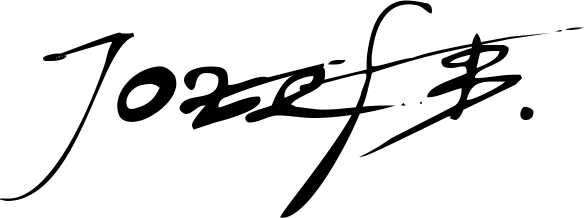
Jozef Borovský, Author, Chrysalis Books
Think! is operated by Chrysalis Books (chrysalisbooks.ca).
Terms of Use
You provide implicit agreement to comply by these Terms of Use by using/viewing the Think! (think.chrysalisbooks.ca) website [the Service]. All images, texts, and codes [Digital Assets] on the Service are copyrighted and owned by either Jozef Borovský, Chrysalis Books Author [the Owner]; or vendors; or contributors - collectively [Content Provider(s)]. All Digital Assets on the Service are the property of either the Owner or the Content Provider(s). Digital Assets on the Service are created by the Owner, the Service, or reproduced under license, and with permission provided to the Owner or the Service by the Content Provider(s). No Digital Assets may be downloaded or reproduced for any purpose, in any manner, unless expressly stated by the Service, or granted written permission by the Owner or Content Provider(s).
Privacy Policy
Everyone's privacy is important at Think! Given the state of the world in some places, nowadays, expressing one's thoughts to an anonymous public is an unwise practice. But, it has mostly been this way with Thinking deemed by conformists, heretical or conspiracy theory. Thinking is not for everyone either, which is a pity - humanity is poorer for it. Nobody at Think! can fix that. Still, everyone is entitled to an opinion, but arguing with ignorant people at Think! is not. Therefore, by this policy, access to certain Think! content is limited to subscribed members only, unless, that is, Content Provider(s) decide to make their work(s) public. By this policy, Think! has no control over public versus private content. It is not a desire at Think! to change anyone's belief in anything, however, learning something new from different perspectives, is.
Think! is operated by Chrysalis Books (chrysalisbooks.ca).
Terms of Use
You provide implicit agreement to comply by these Terms of Use by using/viewing the Think! (think.chrysalisbooks.ca) website [the Service]. All images, texts, and codes [Digital Assets] on the Service are copyrighted and owned by either Jozef Borovský, Chrysalis Books Author [the Owner]; or vendors; or contributors - collectively [Content Provider(s)]. All Digital Assets on the Service are the property of either the Owner or the Content Provider(s). Digital Assets on the Service are created by the Owner, the Service, or reproduced under license, and with permission provided to the Owner or the Service by the Content Provider(s). No Digital Assets may be downloaded or reproduced for any purpose, in any manner, unless expressly stated by the Service, or granted written permission by the Owner or Content Provider(s).
Privacy Policy
Everyone's privacy is important at Think! Given the state of the world in some places, nowadays, expressing one's thoughts to an anonymous public is an unwise practice. But, it has mostly been this way with Thinking deemed by conformists, heretical or conspiracy theory. Thinking is not for everyone either, which is a pity - humanity is poorer for it. Nobody at Think! can fix that. Still, everyone is entitled to an opinion, but arguing with ignorant people at Think! is not. Therefore, by this policy, access to certain Think! content is limited to subscribed members only, unless, that is, Content Provider(s) decide to make their work(s) public. By this policy, Think! has no control over public versus private content. It is not a desire at Think! to change anyone's belief in anything, however, learning something new from different perspectives, is.
2024, Jozef Borovský. Think! Chrysalis Books